Showing posts with label Dylan Evans. Show all posts

Wednesday, September 26, 2012

Week 7 Summary


For weeks 7 workshop tasks we were required to have a look at what Readers as text participants, Reading as text users and shared reading all mean. From this the group, as well as by having a classroom discussion established that;

Readers as text participants
Knowledge about the topic
Knowledge about the Genre and how it is organised (structure)
Skills and Strategies
Interpreting
Innovating on a text
Making links to prior knowledge and experiences
Drawing inferences
Retrieving literal meanings

Reading as text users
Being a text user means knowing how we use texts to achieve purposes in our society
Text users understand that texts are structured differently for their purpose ( Recipe, Report, Recount, Story)

Shared Reading
Texts or visual on:
An interactive whiteboard
Television or computer screens
Overhead Transparency
Big Book
Chart
Teacher needs to have a particular focus for teaching session


From this a classroom example was shown via a YouTube clip which shows a teacher executing a lesson of guided reading perfectly. It was good to have an example shown as it gave myself, and I'm sure others, a greater understanding on how to execute a lesson of guided reading to the last perfect detail.

Week 6 Summary


For this weeks workshop tasks in English Language and Literacies we were required to do a pre-workshop task of creating a glossary on certain terms we had read in Winch, et al. Some of the words we were required to find a definition for were "Semantic information", "Syntax", "Phonological information" and "Graphological information".

This proved to be quite a challenge finding out the correct terminology. I personally struggled with finding out what "Semantic information" was which lead me to read the first eight pages on a thesis about the topic! However, in our reading groups we combined our answers to create a glossary of terms that we felt were accurate and helpful.

We also had to summarise three different ideas that we had for our upcoming digital narrative assignment. Unfortunately for us nobody had any specific ideas posted which resulted in the group just discussing rough, vague plans for the assignment. These plans included creating a simple children's book, what programs to use and how to put it all together.

Tuesday, September 25, 2012

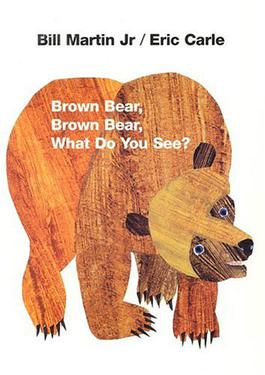
Dylan Evans Children's Book- Brown Bear, Brown Bear, What Do You See?

Brown Bear, Brown Bear, What Do You See? is a young children's book written by Bill Martin Jnr and Eric Carle. The book was written over 40 years ago and still proves to be a popular hit in the classroom.

The story is a relatively simple one. The narrator of the story asks the Brown Bear what can he see. This pattern follows with the Brown Bear seeing a Red Bird, Yellow Duck, etc. Towards the end of the story the narrator then asks "Students, what can you see?" to which the students all reply with what they have seen throughout the book.

The story is quite interesting for young learners with the illustrations being colourful and bright. The narrator speaking directly to the characters in the book, as well as the students reading it at the end proves to be quite a popular engaging tool to have the students in the classroom focused, as well as entertained.

Inside a classroom the book can be used as a beginners tool for those that are at the early stages of reading. This is mainly because the students can begin expressing a greater range of vocabulary by linking words that may be foreign to them to the pictures inside the book,

Dylan Evans Children's Book- The Very Hungry Caterpillar

The Very Hungry Caterpillar written by Eric Carle is a timeless childrens book that has proven to be a classic for over 40 years. The books story revolves around a Caterpillar who breaks out of an egg and is ver hungry. Throughout the week it shows the Caterpillar eating through various different foods including apples, pairs, etc. One day however the Caterpillar ends up having a stomach ache. To cure this he heats a nourishing green leaf. The next day his stomach is all better and the Caterpillar decides to build a cocoon. A few days later the "Very Hungry Caterpillar" turns into a "Very Hungry Butterfly".

The book is fantastically illustrated with lots of bright colours. This would appeal heavily to much younger children, particularly those of ages 3-6. The book is very simple to read so is a perfect starting point for those that are just beginning to learn different words.

Inside a classroom this book can only be used in a limited way due to the age group of the readers the book is aimed at. However, a teacher could use this book as quiet reading time to read aloud to students (an important aspect of learning to read).

Dylan Evans Adolescent Novel- Unreal!

Unreal! written by Paul Jennings is adolescent novel primarily aimed at the age group of 12-16. The book covers several short stories including "Without a Shirt".

"Without a Shirt" follows the story of a young boy who unfortunately after every sentence utters the words "Without a Shirt'". With his trusty dog who always digs (so much so it forces the whole family to move homes) the boy realises his speech impediment all comes down to a family curse and some bones.

Another story within the book called "Lucky Lips" is about a teenage boy who has never been kissed. That is until one day he gains a magic lip balm that once applied has the first woman he sees  in a spell that leads to her kissing him. This trick works every time for the boy, however, it often leads to awkward and uncomfortable situations.

Depending on the story, the book changes from being written in first to third person. The stories appeal comes in the form of toilet humour which is why it proves to be popular with younger adolescents.

Inside a classroom this book could be used as part of a cross curriculum activity with art where students are to draw a storyboard of one of the short stories.

Dylan Evans Adolescent Novel- The Hunger Games

The Hunger Games written by Suzanne Collins is a futuristic, almost "sci-fi" novel about the region called "Panem" (which is formally known as North America) and an annual yearly festival called "The Hunger Games". The games require two randomly selected "tributes" (competitors), a male and female, from each of the 12 different districts to engage in a battle of the death with the winner having their district showered in gifts. The story mainly focuses on Katniss, a young girl selected to be a tribute and Peeta, a young male from a different district selected. The book surrounds the theme of Katniss not wanting to hurt Peeta as earlier in her life he gave her bread that ultimately saved her from starvation.

Although being listed as an adolescent novel the book is quite sophisticatedly written and some of the more uncommon words, or names of places make it difficult for fluent reading. The book is primarily aimed at middle to older aged teens.

This book will be difficult to incorporate into a classroom environment as it is mainly for older teens. However, due to it's release as a highly rated movie a book-film comparison could be undertaken.

Dylan Evans Children's Book- Are You My Mother?

Are You My Mother by P. D. Eastman is a fantastic children's book that is quite simple to read. The story follows a mother and her previously unhatched baby bird. When the egg of the baby bird starts shaking the mother goes off to find it some food. Whilst the mother is off looking for worms the baby bird hatches from her eggs and asks the question "Where is my Mother?" The baby bird then falls out of its nest and goes off on an adventure to find its mother. Along the way it encounters many various things and objects to which it asks the same question "Are You My Mother?" Eventually the "snort" (steam shovel) lifts the baby bird up to its nest where it is reunited with its mother. Finally the baby bird found her.

P. D. Eastman's book is a fantastic, relatively short, picture book that is aimed at children between five and eight. The author uses easy language throughout the entire story making it a perfect book to give to early learners, or those that are struggling with reading.

Inside a classroom the book could be used as part of a reading group that may be struggling to grasp fluency in reading. This is due to the books easy to read nature.

Monday, September 24, 2012

Dylan Evans Adolescent Novel- Harry Potter and the Philosophers Stone

Harry Potter and the Philosophers Stone is a popular childrens novel written by J.K Rowling. The book is so popular that it is actually the highest selling novel in the world.

The book follows the adventures of Harry Potter, a young boy who has recently found out he is a wizard. Harry, along with his two friends Ron and Hermione travel to Hogwarts School of Witchcraft and Wizardy where they encounter dangerous situations that reveal a lot about Harry's childhood.

This book is quite advanced for an Adolescent novel and should mainly be read by people 13+. The story contains some quite frightening and mature themes which may scare readers younger than this age.

Inside a classroom Harry Potter can be used in several ways. One of the more populars ways of using the book in a classroom is linking it with the Arts (cross curriculum) and creating students own withches hats or wands, after reading the book.

Saturday, September 1, 2012

Dylan Evans Children's Book- The Little Refugee

"The Little Refugee", written by Ahn and Suzanne Do, with illustrations by Bruce Whatley is a powerful children's picture book aimed at promoting awareness, as well as fair treatment of refugee's. Ahn Do, a prominent Australian comedian and co-author of this book was actually a refugee as a young child himself and most of the incidents inside the book are actually what happened to him and his family. One of these incidents include their boat being overrun by pirates who almost through his brother overboard, but instead had a change of heart and left them water. The book also focuses on the young boy trying to fit into the Australian way of life and the bullying the child receives from being different.

This book is quite powerful and therefore may frighten some younger children due to the more mature themes it expresses. The book is aimed at any person from the age of 11+ I'm assuming.

Inside a classroom this book can be used to look at the issue of "boat people" and the tolerance of people who are perceived as being different. This can be linked with students perhaps writing a short piece of writing in which they detail what they'd bring with them if they had to flee their country (this task was used in my current PAR class two weeks ago).

Dylan Evans Adolescent Novel- 1984

"1984", written by iconic author George Orwell, was originally written in 1949 and focuses on a futuristic world in they 1984. In this futuristic world the ruling authorities have complete and total control, suppressing even peoples thoughts under the name of Big Brother. Winston, a young man who resents the authority and oppression  begins writing his thoughts into a diary. He meets a young woman who feels the same way about the party, along with a man who he believes to be on his side called O'Brien. However, O'Brien turns out to be a spy for the party who then proceeds on a process to brainwash Winston into loving the party. After much time, Winston's spirit is broken and eventually learns to love the party all the while realising "Big Brother is always watching".


Although this novel is primarily aimed at adults, mature students (upwards from the ages of 14) can read this book quite sufficiently. The books story is quite riveting and doesn't contain an ending that satisfies the reader, much like other novels.

Inside a classroom this book can be used as a way to engage learners into thinking about what a future world for ourselves may include. Will it be the similar to George Orwell's vision? Will the amount of oppression inside the book directly translate to real life?

Dylan Evans Children's Book- The Polar Express

The Polar Express, written in 1985, is a timeless classic children's Christmas book. It was written and illustrated by Chris Van Allsburg. The book focuses on a young boy who seems to have lost the spirit of Christmas. This all changes however, on Christmas Eve when he hears the sound of a train outside his window. From here on he boards the train to take him to North Pole, along with many other young people, to meet Santa Claus. Once at the North Pole the young boy finds out that it is indeed him who gets to choose and have the first present of Christmas. The young boy elects to choose the bell off a reindeer's collar and once received, securely places it back in his pocket. On the way home the boy realises there is a hole in his pocket and therefore loses the bell. He goes to sleep that night to wake up in the morning and find the bell waiting for him under the Christmas tree. It was Santa Claus who delivered it. It was later said that whoever can hear the bell are the ones who truly believe in Christmas.


This book by Van Allsburg is well structured and written, focusing on a beginning (boy not believing in Christmas), middle (boy gaining reindeer's bell, then losing it) and ending (finding the bell and believing in Christmas again). The illustrations are quite well done and really add to the magical feel of the book.

Inside a classroom this book can be used as a part of a lead up to Christmas activities. The book can be used as a focal point, then the student's can draw their own version of the Polar Express.

Dylan Evans Children Book- Where the Wild Things are.

"Where the Wild Things are" is an all time classic picture book that has recently been adapted into a film. The original book was written by Maurice Sendak, who also illustrated the book as well. The book focuses on a young man named Max, who gets into an argument with his mother after getting a little bit too over excited. From this, Max's emotions run wild and sees him creating a fantasy land inside his bedroom, surrounded by forest and water. This is where the wild things are located. At first Max is initially scared of the monsters, however, he comes to realise that they view him as the wild thing and want him to be their leader. The book carries on with Max and the Wild Things getting up to general horseplay, with the ending seeing Max's fantasy world come undone when he smells supper and realised he's back in his bedroom.

The book's illustrations are truly what make it so great. Although the general story is strong, it's the pictures that bring the book to life. Sendak is clearly a multi-talented person and has used all his skills in this particular book.

The book can be aimed at a wide age range, anywhere from 4-16. Inside a classroom I would use this book to create a discussion on how students handle their own anger and emotions (much like Max and his creation of an imaginary world), with the general lesson focusing on behaviour management.

Wednesday, August 29, 2012

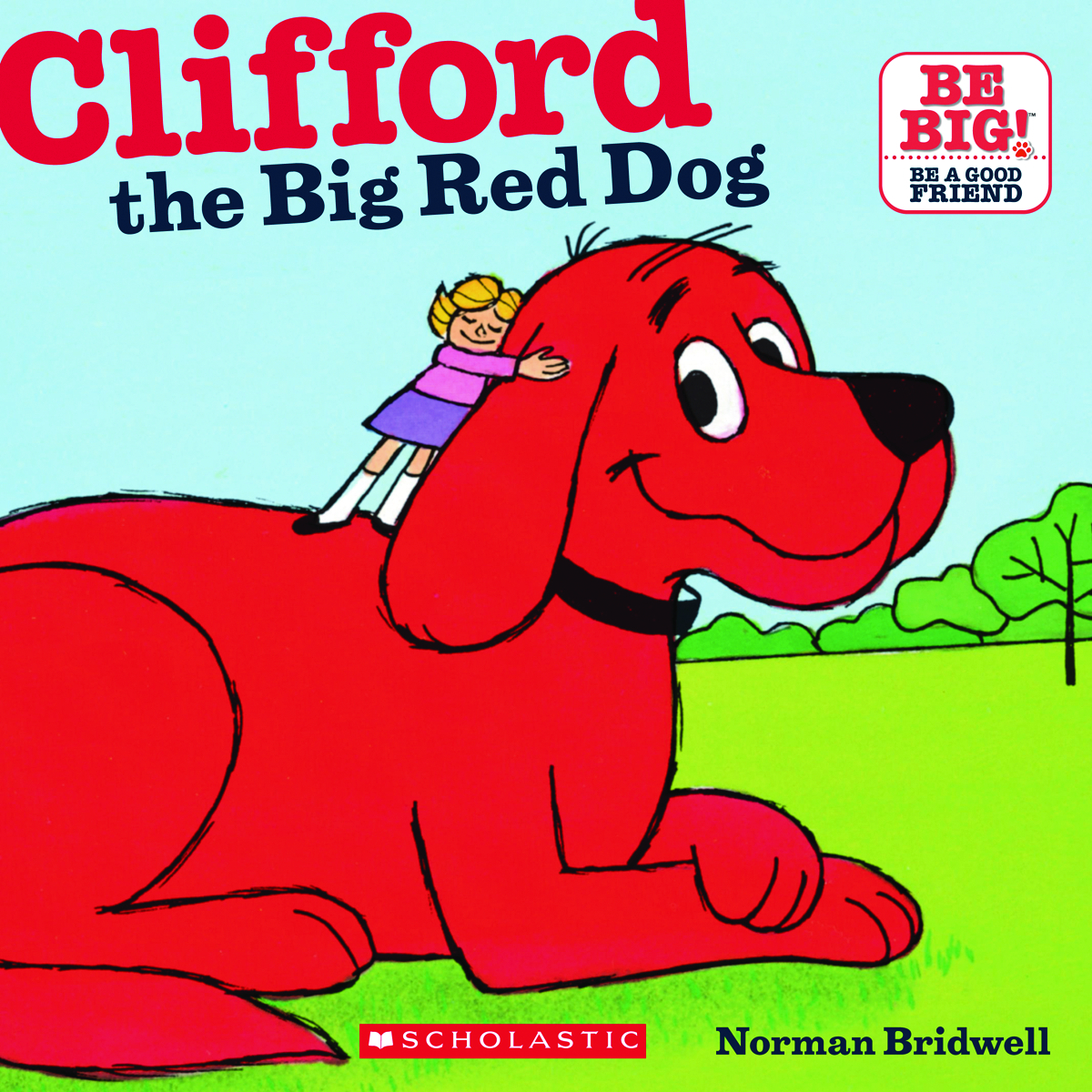
Dylan Evans Children's Book- Clifford the Big Red Dog.

"Clifford the Big Red Dog", written by Norman Bridwell, is a children's picture book that has transcended generations to become a favourite to many. The book focuses on a young girl and her dog, Clifford. When the young girl adopted Clifford he was only a puppy and was much smaller than many other dogs. For this reason her parents didn't believe Clifford would survive through the winter. However, one night the young girl wished that Clifford would grow big and strong and sure enough over the next few weeks Clifford kept growing, and growing, eventually becoming over 25ft tall.

This book is certainly focused on a younger age group, mainly Year 2/3/4. The book is relatively easy to read, although students may need some assistance depending on their level of competency.

The illustrations in this story are fantastic and certainly gives students a perspective of the size Clifford has grown. For this reason I believe teachers can integrate this book into a mathematics curriculum and focus on measuring and ratio. 

Dylan Evans Adolescent Novel- Specky Magee

Specky Magee, written by Felice Arena and Garry Lyon is by far my favourite book as a child/teenager growing up. Specky Magee follows the story of a young, aspiring football player called Simon "Specky" Magee. Although the book is heavily dominated by football and scenarios relating to it, it also contains serious themes as well. One of these is themes is when Specky finds out that he is adopted and goes on to search for his biological father.

The book is fantastically written and can be easily read by children as young as 10. Although due to the stronger themes involved I would suggest not reading it until 13 or so. Specky Magee is a good way to start introducing student's to bigger novels, particularly boys, as football is usually closer to their interests.

It would be hard to use this book inside the classroom as it won't appeal to everyone, however, it could be used as an option in a book report/presentation activity.

Dylan Evans Children's Book- The Cat in the Hat

The Cat in the Hat is a beloved children's book written by Dr. Seuss over 50 years ago. The story surrounds two children who are stuck at home one miserable day, bored and lonely. This is followed by the Cat in the Hat entering their house through a closet and ensuring a chaotic, but fun day is to be had. Added to the story is a fish who is opposed to all the antics that are being played out in front of him. The fish constantly says "What would you do if your mother asked you?" in reference to the children's mother who would not approve of what is happening.


The book is well known throughout the entire world and is often known by people, even if they have not read it. The book has bright and colourful pictures, as well as relatively easy to read text.

I personally would use this book in a Year 2/3 class as part of a reading group scenario. This is due to having most students be able to read it independently and easily, but still find enjoyment out of it at the same time.

Friday, July 27, 2012

Introduction- Dylan Evans


Hi there my name is Dylan Evans. I am 19 years old and am currently in my second year of studying a Bachelor of Education. I look forward to a teaching career specifying in Physical Education and history.


I am very passionate about soccer. I’m currently in my 15th year of playing and have been supporting Chelsea FC for my entire life. In fact, my first sentence was “go you blues”. This was due to being brainwashed by my grandad at a very early age. 


Throughout my schooling I have always enjoyed English as a subject and reading has always been a part of my life. Lately, I have been very interested in reading biographies of sports and music people (such as “Scar Tissue”: The biography of Anthony Keidis).


I look forward to expressing my thoughts on this blog each week and hope you enjoy reading them.

Cheers,
Dylan.